

Playfulness and Contemporary Digital Video Art
A spectrum between chaotic nihilism and sincerity

I’ve been in a bit of a rut when it comes to contemporary art appreciation— or art appreciation, generally. I’m awed by friends who have “made it” in this sphere, but find myself deeply unimpressed by the institution overall. Often I can think of few things less meritocratic than the art world (and the world of publishing is not far behind). Art that sparks feeling of any kind, even revulsion, is rare, especially in American art. Max Norman, in the Drift, describes the American pavilion at the Venice Biennale as “slop”, writing that it “evinces little belief in art’s agency and promise to do much of anything at all.” Not surprising of a country whose culture refuses to believe in the importance of art and artmaking, and yet reserves participation in art as such to a privileged few. No wonder contemporary art on the whole is so myopic, self-congratulatory, impenetrable, and unexciting.
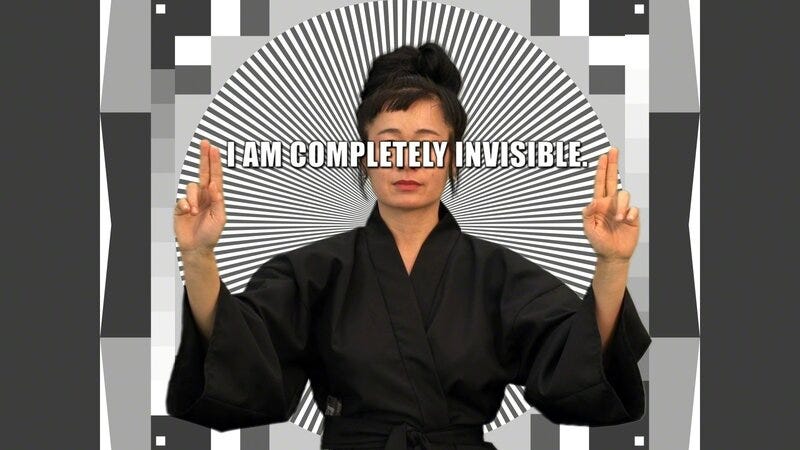
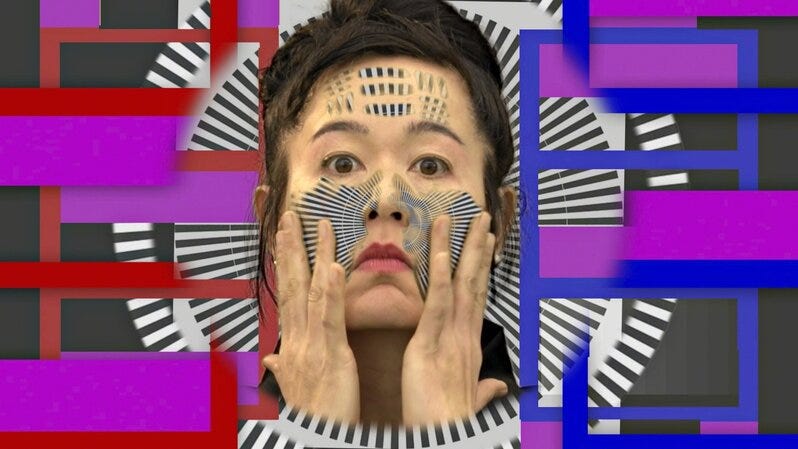
In recent years, I’ve tended to skip over static visual art in favor of video— not just because I’m a film professor and it’s my job, but because I find video art stranger and more playful. One of my favorite video art pieces of all time is Hito Steyerl’s How Not to be Seen: A Fucking Didactic Educational .MOV File (2013), which I saw completely accidentally at the Philadelphia Museum of Art (formerly known as the Philadelphia Art Museum, formerly known as the Philadelphia Museum of Art, lol) in mid-pandemic 2021. It blew my mind: the playfulness! The embrace of digitality only to show us its more monstrous forms!
Parodic and odd, funny and biting, video theorist, artist, and e-Flux darling Hito Steyerl kind of has it all.
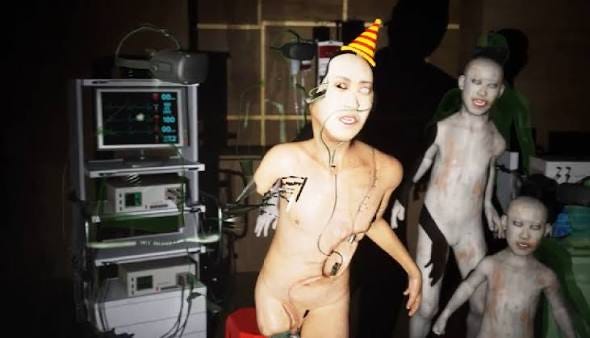
In the past few weeks, I reflected a lot on the playfulness and potental of video art while visiting the Carnegie International and the Mattress Factory in Pittsburgh. Two pieces at the Carnegie, both by artists from Asia, seemed to take a line out of the Steyerl playbook in their digital absurdity. Li Yi-Fan’s What is Your Favorite Primitive (2023) revels in the awkwardness of digital media. Created using a video game engine made specifically for this piece, this work is serious and seriously pardodic. An avatar of the artist, seemingly using 20+ year old technology, discusses digital media as if on a Sinophone Ted talk. But the front of his body looks drawn-on with scrawly crayon, and the back is entirely a blank white. In a snort-inducing sequence of what can only be described as digital slapstick, he picks up a cigarette and constantly drops it, only to have the cigarette jump back into his fingers, as if magnetized to his hands like a warped puppet. In another hypnotic scene, his bizarre white body contorts around what looks like an auditorium with red velvet seats, but it is as if the artist-controller-director cannot get the perspective right, with the artist-avatar flailing at bizarre angles while the director finds a barely workable perspectve. It is as if this Taiwanese artist is saying: “what a fucking grift this whole thing is!” and takes us along on the ride.
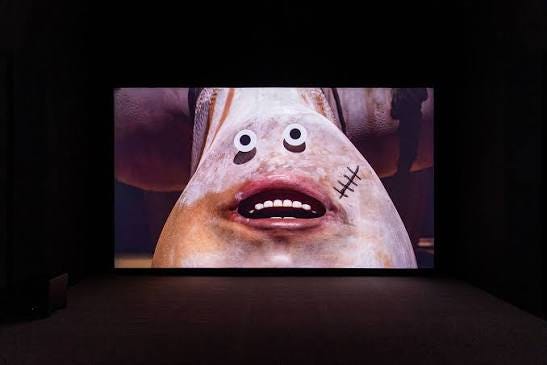
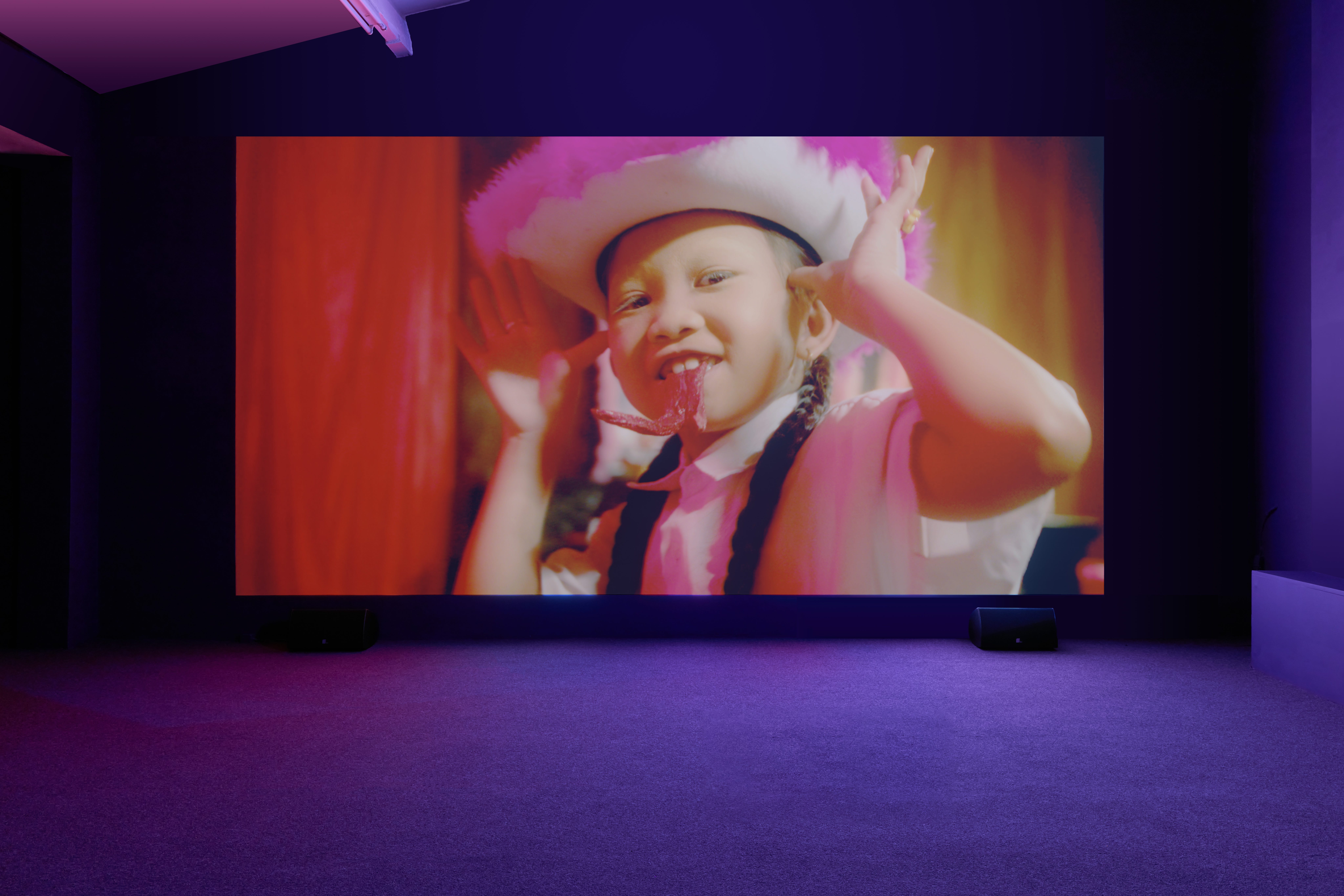
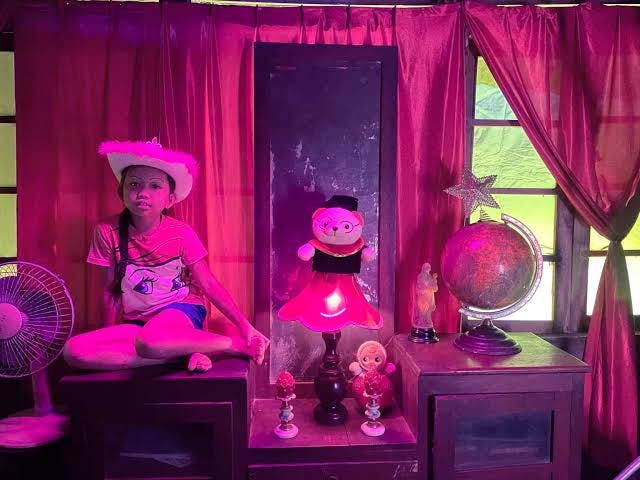
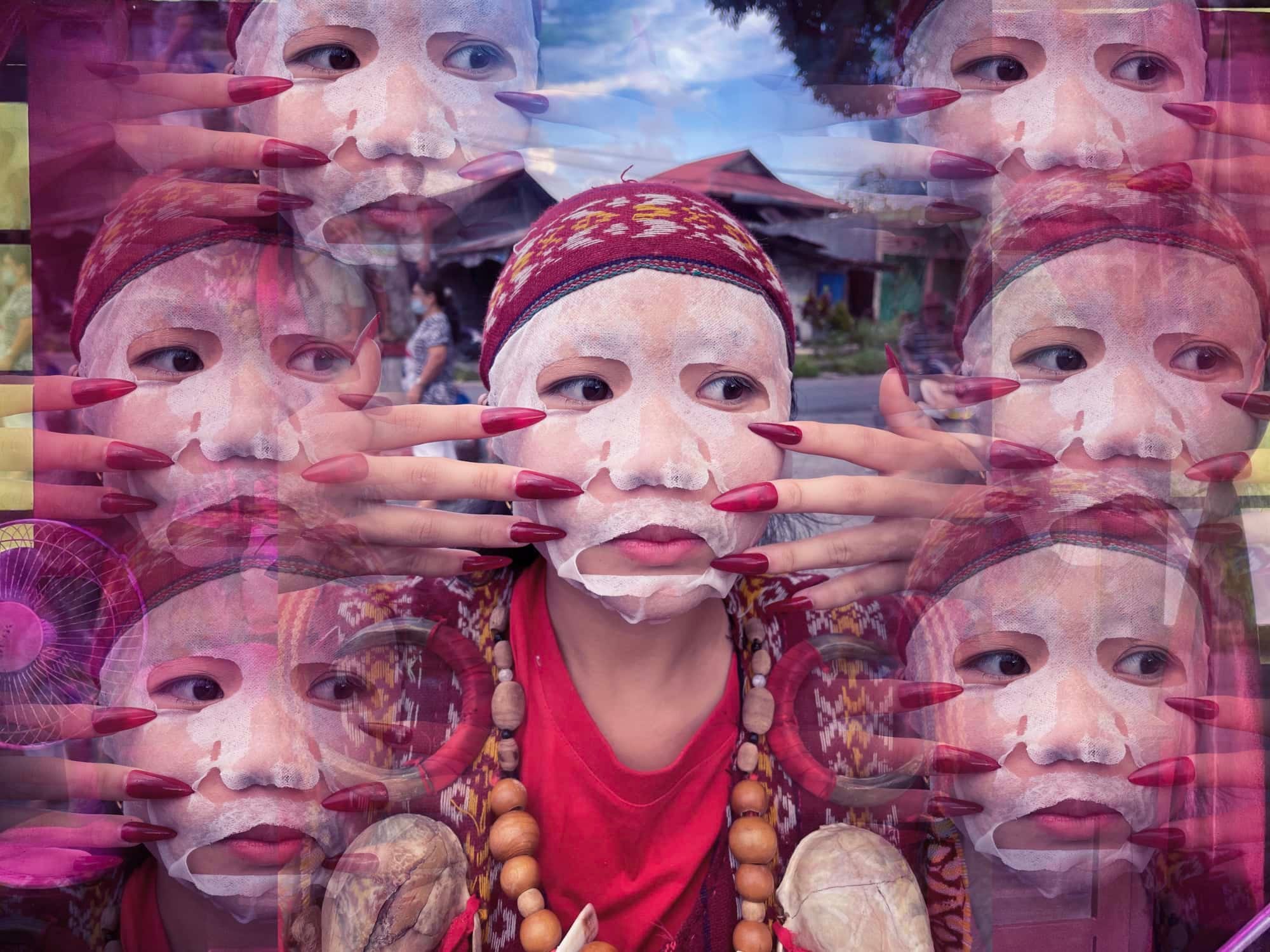
Also playful, and even more childishly enjoyable, was Indonesian artist Natasha Tontey’s Garden Amidst the Flame (2022). The film is a half-hour coming-of-age film and meditation on the cosmology and practices of the Minahasa, an Indigenous nation in the North Sulawesi province in Indonesia. The video is played in an entirely pink room, with a pink faux-fur fluffy bench. There is a specifically Gen Z aesthetic about the whole piece, although Tontey is almost exactly my age (middle Millennial), perhaps because the protagonist wears barettes and ports elaborate nail art. The film embraces a very particular 80s and 90s tokusatsu film aesthetic in which the fakeness of the digital effects is made purposely apparent: there are demons and ghosts that are consumed by a faux fire worthy of Power Rangers digital effects. Overall the film is like a playful, femme-philic Pulgasari (or North Korean Godzilla, made by a kidnapped South Korean— more on this here). The film is especially enjoyable for the pre-teen and younger girls cast as warriors, shamanesses, and playmates, and with whom Tontey collaborated over a year to make the film. At one point, the gang of girl-warriors parade through the streets in a truck, adorned with face masks (like, the Korean and Japanese spa variety). The film is emphatically gender-queer and profoundly strange.
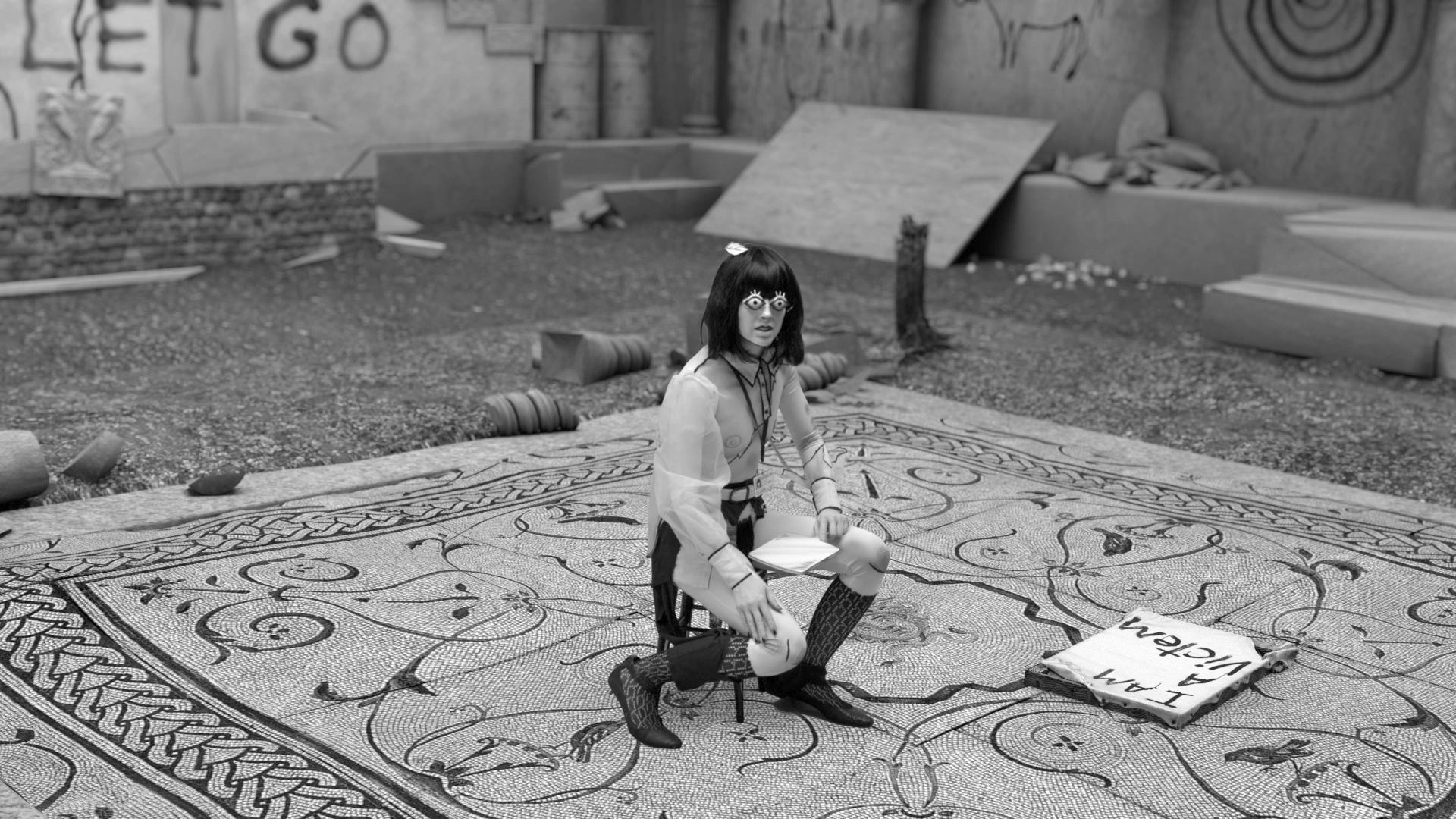
In the tactility and absurdity, there is something here of the Mary Reid Kelly and Patrick Kelly sculptural place-based animated pieces which I saw at the Fabric Art Museum in Philly back in 2021 (for those not in the know: this is my very favorite museum in Philly! And it’s free.99 !!) In pieces like Blood Moon and I’m Jackson Pollock, the art world itself is lovingly pilloried in a deeply funny and absurdist way. People have called their work burlesque, and I think the queerness inherent in this term is spot on. I may also call it clownish.
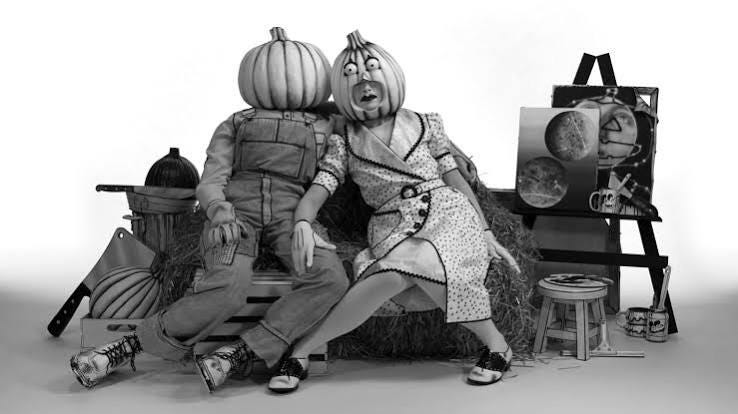
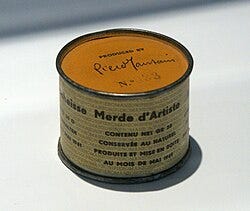
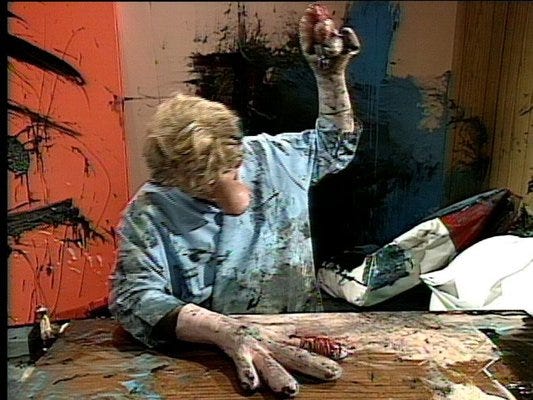
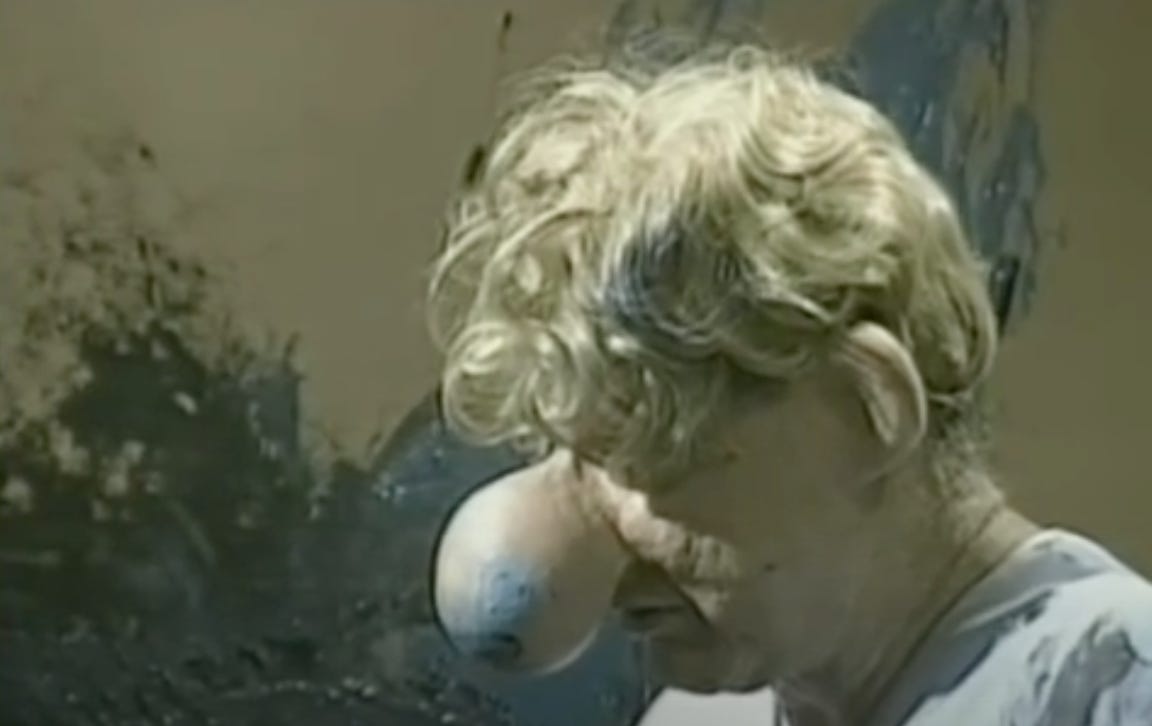
The criticism of the art world reminds me of another favorite art-world-demolishing piece of video art that I saw back in a sculpture class in college: Paul McCarthy’s Painter from 1995. Described as “oscillat[ing] between the comic and the grotesque” (like, perhaps, all good video art??) this video performance sees the artist, wearing a blond wig, enormous bulbous nose and swollen latex hands, smearing paint and condiments on giant canvises. Paint tubes around are labeled RED, BLUE, BLACK, and SHIT, obviously referring to the 1961 “anti-artwork” by Piero Manzone.
My favorite part of Painter, though, is the end, where collectors with enormous noses sniff the artist’s bare butt, while pronouncing— or more like, squawking— the names of famous artists (“De KOOOOning! De KOOOOning!”)
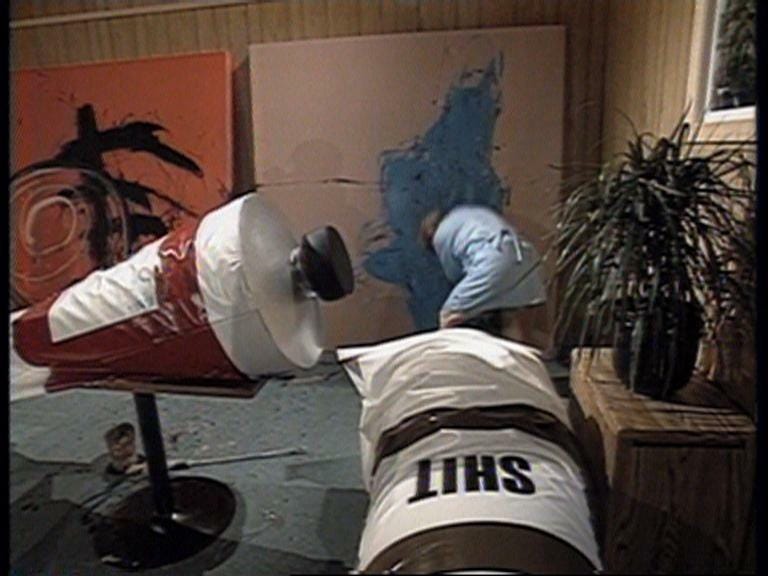
Of course, this kind of self-congratulatory work has its limits. Part of its joy is the intra-art-world self-refentiality (I enjoyed Painter a lot more once I learned who De Kooning was, for instance, and Marina Abramovic and Paul Rothko). It isn’t necessarily leftist— especially not McCarthy’s piece. (And perhaps it is meaningful that the prof who introducted me to McCarthy’s work went on to become an ultra-right-wing Facebook commentator— although I am 60% sure his right-wing “conversion” is itself a long-term work of performance art). There is a certain chaotic nihilism in a lot of contemporary digital art that is useful to a point. Others, like LuYang, whom I’ve written about here before and who continues to frustrate and fascinate (Luyang is known for making digital art that illustrates Buddhist themes, theory, and cosmology), are sincere almost to a fault, almost steadfastly refusing to confront the politics of their aesthetic choices (and use of the digital, including, in more recent video works by LuYang, AI).
But still there is something about video art that makes me far more excited— a kind of absurdity and chaos that I rarely find in non-moving image formats. Of course, I’m always biased in favor of movies, even of the exceedingly pretentious variety. From my view, the more the art world tries (however quixodically) to turn their giant, bulbous noses up at the industry itself, the better for everyone (even if, inevitably, their shit is packaged into 90 limited-edition tin cans).
Yours, as always, xo-J
P.S. I'm singing in a show with the Ukrainian Village Voices later today! Come see us sing and help us raise money to make a new album!
I Immediately thought of Hito’s work as well as soon as I read your intro. I feel similarly about art world. (I will check out the other artists mentioned!) As the contradictions of capitalism become sharpens in the last few years I find myself enjoying contemporary art less and less as it desperately tries to make itself relevant. I say that as someone who easily overlooks flaws in art and try to take in what is enjoyable/good. I also enjoy art that is playful and comical. I thought Laurie Anderson’s earlier works about clones and her PSA videos fun and enjoyable. Another artist I enjoy is Paul Chan, his work is playful and humorous. I believe he was also an organizer before he became an artist and still tries to bring some politics in his work .